24 March, 2023

Three years after the first Lockdown!

On this day, 24th March 2020, India experienced its first ever full lockdown for 21 days. The entire country came to a halt; abrupt standstill of commercial and economic activities. The State & Central Governments imposed an extremely strict gag order that citizens were not allowed to even step out of home, save for buying medicines along with a proof of the most recent prescription from a certified Doctor. Each one of us in the country had a different story to narrate – some faced extreme medical challenges while many had other stories, such as loss of livelihood and uncertainty of the next meal, especially for the poor, the marginalised and physically challenged at that.

All forms of transportation came to a halt; flights, trains, buses and local transportation such as taxis and auto rickshaws. The retail segment was among the most impacted. It was a double whammy of sorts – those who worked in all other industries eventually spent their monies on Food, Clothing & Shelter. On the one side, shutting down the shops meant loss of business for the day; on the other hand, those who would spend at retail stores were themselves staring at a bleak present and immediate future, for many employers were not sure / clear how to pay for unproductive employees when there was no business at all. 

From the smallest kirana to large retail companies, it was VUCA in full flow – Vulnerability, Uncertainty, Complexity and Ambiguity. None of us knew what would happen next. 


Slowly but surely, things started opening up from June onwards only to once again relapse shortly thereafter. This roller-coaster ride continued until May 2021, when a partial and a complete lockdown was brought back in several states. The festive season in 2020 and 2021 were muted, for, the majority of the retail sector and thousands of retailers were staring at several crores of rupees worth of stocks; unable to liquidate them to pay suppliers, in effect unable to buy new and more relevant stocks as required. Hard times, those were.


By October 2021, there was some semblance of orderliness that was back. People started to step out of their homes risking the dreaded spread of the infection. By then, most of the countrymen and women had taken atleast 1 dose of the vaccine and were now armed with the strength to face any eventualities. Whether the vaccine worked to its full or not – many had tested positive despite taking the shot – people had gained the strength to fight it. 
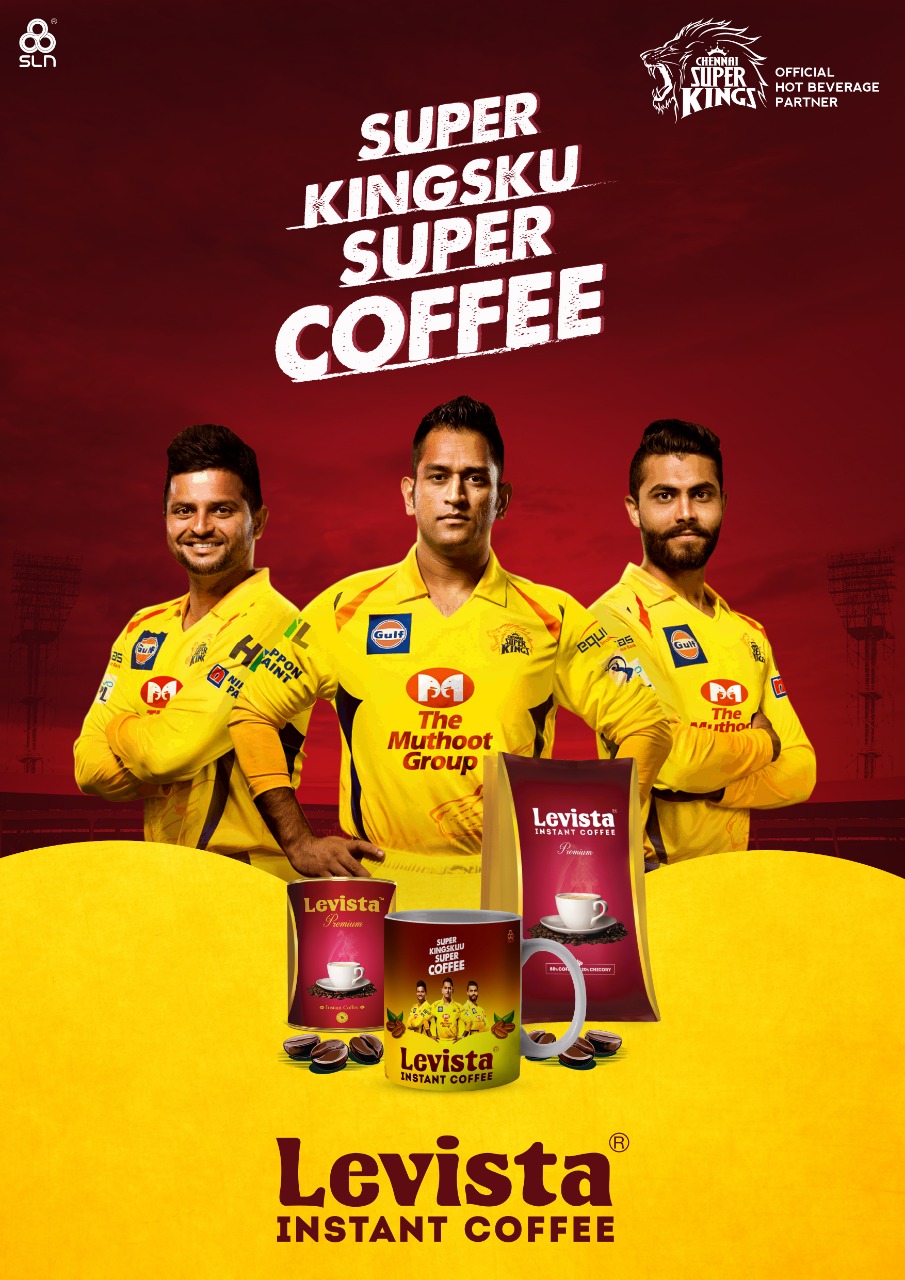


Three years later, as I write this note, I carry immense gratitude to the Almighty, my family, friends, former employers and colleagues, all of whom stood shoulder to shoulder with each other and overcame several obstacles. Though I too, like millions faced setbacks in the workplace, I am glad that it was this bleak period during which I could shine professionally with a few big ticket accolades to my credit. Signing up with Chennai Super Kings as beverage partner for Levista Coffee will be one of my most cherished moments along with placing the brand alongside Kamal Hassan in Big Boss Tamil. Working closely with Ad-film Directors, I co-scripted and oversaw a dozen films for Levista & Specsmakers during this time.


Joining Indian Terrain was a calculated move, but went awry due to various reasons. Some wrong calculations, despite various measures taken before and during my stint; so be it. Life moves on and keeps teaching us every other day! When we succeed, we learn; but when we fail, we learn a lot more. Wisdom is not repeating mistakes and I hope to gain from some of the key learnings I have taken during this three year period. 


Over the past 15 months, the Indian economy has shown much resilience. Retail Industry is back to its charm pre-pandemic, though there are a number of challenges ahead of us; inflation is pinching the middle class; over all cost of household has drastically increased, including fuel, power, road tolls, etc.; loan books by banks are seeing a huge surge, a sign of good times but fraught with higher risks as well. Nevertheless, I believe Indians are more hopeful now than ever before. And that matters.


PS: By the way, I am glad, that this happens to be my 300th blog article. No, it wasn't planned at all... 

20 February, 2023

The hype around Air India’s big buy

Much is being spoken, written and debated about the recent purchase of 470 aircrafts by Air India from Airbus and Boeing. So much so, that the US President made an official statement that this could create a million jobs for his countrymen. Many politicians thanked the Indian Prime Minister while so many questioned his role in this private affair between a buyer and a seller – why and how would the Governments on both sides have any role. Leaving all the controversies (if one exists!) aside, let us see the opportunity that we are sitting on. 

In the past 8 years or so, the present Government has reactivated over 70 airports. These are not new ones really, for they already existed. Barely. These were airstrips with an ATC Tower at best built before WW 2 by the British. The Union Government through its ambitious project to make the common man fly – Ude Desh ka Aam Nagarik (UDAN) was activated and many unused airports were operationalised. It is another thing altogether that our railway networks are choked and a small section of travellers do not mind paying a premium for air travel.


A view of the Udaipur Airport developed under UDAN


Altogether, the number of air passengers have grown from 37 mn pa in 2010 to 167 mn in 2019 (sans 4 days of the first lockdown!). The number halved for FY 2021, grew to 123 mn in 2022 and would be around 130 mn in the current FY. By 2027, we expect over 200 mn passengers to hit the sky in a year. To give it a perspective, over 2.2 mn (2 Crores) people took train journeys daily in 2019 of which an estimated 8% of them travel in airconditioned classes.


What excites me, as a (Travel) Retail Professional are the possibilities for retail at airports. To accommodate these new 470 aircrafts plus another equal number from all other incumbent airlines at the moment in India, we are expecting a blast in the skies. Don’t worry, it wouldn’t be so choked like our railway networks where one express train has to stop at times to let the other one travel. But the congestion at airports (runways) would be inevitable. 


IGI Airport, New Delhi


The new Terminal 3 built at New Delhi Airport a decade back is already choking during peak hours. Mumbai is building another new airport and the same is the case at Noida. Bangalore has commenced a new parallel runway last year and a brand new terminal T2 which will be fully activated by Q3 FY 2024. Goa has a brand new airport in the north while there is no confirmation of shutting down the existing one in the south of Panjim. 


Keeping aside the top 20 airports – 2 super metros, 4 metros and the top 16 cities in India – there would be 175+ operational Airports across the country by 2025. The bare minimum would be a daily passenger count of 1,000 pax/day while the maximum would be 30,000. The top 6 airports, by then would be handline 30,000 – 60,000 passengers per day! 


At the moment, the spend per passenger in Indian airports is abysmally low. Singapore’s Changi Airport recently announced their CY 2022 revenues from Travel Retail – USD 870 mn. That would be 38% of 2019 revenues, which means in 2019, it would have been USD 2.2 Bn pa. Dubai’s retail and F&B revenues pre-pandemic were a little over USD 2 Bn pa; Hong Kong, Paris CDG, Frankfurt and Zurich Airport, each had Travel Retail Revenues between USD 600 mn to USD 1 Bn pa. All this crashed due to Covid-19 but is slowly bouncing back.


New Integrated Terminal Building coming up at Chennai Airport

In India, Travel Retail has been a non-starter except at the top airports, especially those which were privatised. AAI continues to operate quite differently, in a manner that is neither exciting nor enticing for retailers to embrace the opportunity. However, change is inevitable and we see a huge improvement coming our way. By 2025, over 5 lakh people would be travelling through our Airports every day. Imagine the  potential retail opportunity that we are eyeing. And these are reasonably affluent passengers with disposable incomes. From a humble cup of tea or coffee to a beer / gourmet meal, F&B seems to be a larger pie than product retail at airports. I had written the reason for this in my previous post


Nevertheless, Air India’s purchase of 470 aircrafts is a boon for Indian Travel Retail. Happy to be back here in my new avatar in Travel Retail supporting the Trinity - Airports, Retail / F&B companies and the Consumers.

29 January, 2023

The Popcorn Conundrum

Just realised that I have seen 3 movies over the last 3 weeks at theatres. Two were in top class cinema halls in a Tier 2 town and another was a Tier 2 theatre in Chennai. Meanwhile, I have also seen twice as many movies on OTT platforms during the same period. The reason to watch movies at theatres, for most of us Indians, is that it is a cherished family outing as well as to see our favourite matinee idols on the big screen on the opening week / weekend. 

As the movies that I watched were all of top heroes, the theatres had a full audience. Except that during the interval break, not even a third of them came to the F&B area to buy anything. 

The Hon’ble Supreme Court of India passed an judgement on 3 Jan. ’23 that Multiplexes & Cinema Theatre Owners had the right to not allow outside food (and beverages) inside the screening areas and that the cinema goers had a choice whether to go or not, and cannot therefore demand to take their own food inside the theatres like how it was 2 decades back. From biryanis to biscuits, fruits to homemade snacks like channa dal & groundnuts, ardent cinema goers carried their own food inside the theatres. Once the show was over, it was a nightmare for the theatre owner to get the auditorium cleaned up before the next show began. 


Enter mid-2000s – the onset of posh Multiplexes across India led by PVR Cinemas and INOX as well as modernisation of screens by standalone theatre owners across India. Around the year 2,000, there were 18,000 screens in India when the country produced over 1,000+ movies pa across 15 languages including foreign-language dubbed movies. By 2019, there were a mere 11,000 screens in India, of which the Multiplex chains had a share of over 2,500. 


Cut to Dec. 2022, there are a mere 8,500 screens of which almost 3,000 are in Multiplexes. 


In 2019, India produced 2,000 movies, running an annual business of over Rs. 30,000 Cr. Hindi  language films accounted for almost 45% while Tamil and Telugu languages made about 300 movies each annually. Post-pandemic, film watching trends have changed tremendously across the world and India is no different. Acc to Q3 FY 22-23 Financials of PVR Cinemas, the occupancy rate has diminished to 29% compared to 36% in the same period in 2019. Tickets prices  have gone up 18% - perhaps keeping inflation in mind. But that’s not the real reason why admissions dropped by a whopping 20% during the said Quarter. 


The reason is the price of Popcorn at theatres! Yes.


For most Indians, watching a movie is a family outing. People plan in advance, get dressed to look their best and travel with glee to watch a movie. Assuming the avg. ticket price pan-India (except Bombay, Delhi and Bangalore) is around Rs. 200 for a decent theatre, the cost per family of 4 is Rs. 800. Add parking charges for 2W/4W and a meal before or after. That would work out to Rs. 1,500- Rs. 2,000 already. Now, if the popcorn at the theatre is going to cost Rs. 100/- per person (usually these are family packs & combos of Rs. 250 and above!), add a beverage or 2 and some more snacks, the food bill is already as much as the movie ticket cost if not more. Most Indians, who were avoiding this madness before the pandemic have completely moved off watching movies in the big screens since 2022 onwards. The numbers speak. 


So why do theatres charge so much for Popcorn and food? Coz, they can never make money & be profitable with such ticket prices, especially if the occupancy rates are so low! 


Ok, Shah Rukh’s Pathaan (2023) has already crossed Rs. 200 Cr in BO collections (in 5 days)  worldwide as I write this; So have 1 or 2 movies each across regional languages, but these are exceptions. Most films of 2022 bombed at the BO. The ones that made headlines were non-Hindi language movies and were (dubbed) releases. 


A theatre needs sustained footfall through the year. 30-40% occupancy during the weekdays and 70% or above over weekends is a theatre owner’s delight. It used to happen until 2015-16. Until Popcorn prices went up! 


Fizzy Coke and Pepsi (with 90% gas & water) and 10% essence have also gone rogue with their sizing & pricing. No one in India wants to drink so much of sugary liquids anyway and in such short duration. To get back audiences to the plexes, we need decent content (of movies). And cheaper F&B, perhaps. One way is to subsidise the food offering; another way is to use them as a bait to get more audience. Afterall, subsidising is a national mantra in India. Sigh. 

My Tesla India experience

On a bright and sunny Saturday afternoon, I decided to walk in to the Tesla India showroom located at Jio World Drive at BKC, Mumbai. It was...