06 March, 2013

Consumer Spend – a loot at Airports

Recently, the Chief Minister of Tamil Nadu launched a populist move in Chennai to commemorate her birthday – a Government funded canteen that serves one idly (rice patty) for Re 1 (1 USD is Rs. 53 approx.) Yes, you read that right, One Rupee for a Idly. The move is aimed to cater to the needs of those under the poverty line and the poor, the working class such as drivers of autos, taxis, trucks and so on. This was a way Amma (mother) as she is fondly known as, appeased the vote bank. It is not sure how much this scheme is going to cause to the State. Ofcourse, these so called welfare measures are out of the state’s coffers – tax payers money. It so happened that the very next day since this scheme was launched, I was travelling through the Chennai Airport which is managed by Airports Authority of India, a government body which also operates the Airport in Kolkata. These two airports faced stiff opposition by the unions when the Ministry of Aviation privatized the other major airports in India in 2005 located at Delhi, Mumbai, Bangalore and Hyderabad. These six airports contribute to over 70% or more of the total air travellers in the country which is estimated at 110 million pax per year. While the Kolkata Airport has been recently renovated at a cost of Rs. 3,000 Crores, the Chennai Airport has been renovated for aorund the same cost and was inaugurated recently although the terminal buildings havent been opened up to the public due to lack of passenger amenities, a move that the Commercial Department of AAI conveniently seemed to have forgotten while planning the terminal building.

IMG_1050

I was taking an early morning flight, a long one that too to Ahmedabad via Mumbai, an arduous 5 hour journey. And I was flying Spicejet, India’s most preferred low-cost airline which doesn’t offer complimentary meals on board, rather “sells” Cashews and Sandwiches at exorbitant prices. So I chose to have a quick breakfast before the Security Check for which I had quite some time. I walked up to the nearest F&B Kiosk which was serving hot food items. I ordered a plate of idly consisting two pieces and a Vada. The damage was Rs. 100/-. Yes, you read that right. Most passengers like me had no option but to pay such steep prices at airports to quench their hunger and thirst. What was more surprising is that the staff do not issue bills for every item sold on their own. Rather, the consumer needs to insist one of they really need one. I demanded one. And bingo, the staff tore a piece of paper from the manual bill book which had pre-written “Breakfast” in many of the bills. A closer look and the TIN numbers which are mandatory were indeed printed. But VAT or Value Added Tax and other charges such as Service Charge, Service Tax, etc. were not explicitly mentioned in the bill. I couldn’t blame the staff because they were just doing their job. I quietly paid the bill and proceeded to the aircraft. Afterall, this is not an isolated case at Chennai Airport. Almost all airports managed by AAI have the same issues more or less.

So, why are airport food products so expensive? To begin with, it’s the way the places are leased out by AAI. They follow an age-old practice of an out-dated tender system wherein those who qualify should propose a base price for the said location. H1, which is the highest quote gets selected. The tender period is usually for 3-5 years and doesn’t specify the architectural look and feel of the outlet. And most often, there is no seating option that is provided. This is completely contrasted by the approach taken by private Airport operators such as GVK and GMR Groups which manage Mumbai & Bangalore and Delhi & Hyderabad Airports respectively. The chosen partners need to submit and discuss schematic drawings and layouts with the airports and thereafter finalized. The design is not just contemporary but also functional and convenient. During my tenure at Bangalore Airport (BIAL) in 2006, we launched a global tender for Retail and F&B which attracted top players in the world to compete on a level playing field. The selection process was touted as one of the most transparent and efficient processes by international media which tracks Travel Retail.

IMG_1051

AAI’s outdated tender system is the mother of all troubles. Coupled with it is its terrible space planning with outlets spread haywire here and there. Add to it, unqualified commercial guys who have no clue of global best practices and arbitrarily follow the H1 route to choose partners. It is quite obvious that they quote higher fees in the tender and therefore over charge customers. Branded players like Café Coffee Day, Subway, Pizza Hut, McDonalds, etc who also operate at airports follow a corporate pricing policy and provide bills with all statutory requirements. Due to high entry costs and related operating costs such as complimentary snacks and beverages to airport staff, most organized players do not even venture into this arena.

A popular Indian Aviation Entrepreneur who successfully started and shut a low-cost airline often used to quip that there is a private mafia now in the form of private airport operators. But then, the government operated airports are no better.

03 March, 2013

Flagship Stores

Fastrack 1After the successful launch of 137 stores across the country, Fastrack, the leading youth fashion accessories brand (a division of Titan Industries, part of the $85 billion Tata Group), today announced the launch of their flagship store at CMH Road, Bangalore. The success story of the Fastrack stores has been unprecedented. Since the launch of its first store in 2009, the retail channel has grown to 137 stores across 68 cities in all metros, mini metros and several smaller towns like Manipal and Nasik receiving tremendous response from its young consumers. The brand is looking at increasing the number to 250 by the end of 2014. Fastrack’s current stores occupy between 500 sq. ft and 800 sq. ft. The flagship store is spread across 1000 sq. ft. The space unfolds through a series of installations and events. A physical grid of white pipes forms the basis for a grid, from which various display systems are suspended. This meshwork of grids hides away services and lighting, and supports various display systems. The store also does not rely on conventional materials apart from a basic vitrified tiled floor, to address issues of uniformity during rollouts across various cities in India. Walls are plastered with a precise mix of cement and form a neutral backdrop to the installations.

Even though there is order in the apparent chaos, there is an underlying sense of exploring a bazaar. This format will be adapted to a multitude of retail formats, including stand alone stores and kiosks. At cursory glance this seems a daunting task, but the entire design is modular and flexible. On the launch, Ronnie Talati, Business Head & Vice President, Fastrack said, “Fastrack is an irreverent brand with in your face, tongue-in-cheek communication; always known to generate a stir, the brand has created a legion of dedicated followers and fans. Fastrack has now managed to translate the irreverence of the brand into a physical space with the launch of this new retail identity”.

Each category has a space of its own and is designed with installations unique to that category. The watches are displayed inside bird cages, the belts are casually worn around a mannequin and the theme is carried forward to poles covered in leather and studs. The bags are suspended in rope using carabiners. Wallets are meant to be pickpocketed from the back of denim jeans and lie hanging out halfway from the pockets, eye wear is displayed on bright yellow bananas. There are old beaten up trunks, floating tables, mirrors, reconditioned refrigerators, urinals and water closets used as display devices, and various objects strewn through the space. Even the transaction desk is centered in the middle of the store becoming an intrinsic part of the experience. Even the signage does not take itself too seriously, and is a riot of blinking color changing lights, set to a DMX controller, representative of lighting from the high streets of Broadway, NY. The small open space in front of the store houses a bike rack and a folding bench.

Fastrack 2

Fastrack is among those handful of brands to set-up a Flagship Store for themselves. Almost every Retail brand worth its pound would like to set-up its Flagship Store in a prime location in the region / country although only a few actually do so. And even more fewer maintain such stores well enough to call them their Flagship. Some of the other examples of Flagship Stores of iconic brands include;

Louis Vuitton
160 New Bond Street
London, England, UK

  • It features a two-story wall of trunks – to showcase the Louis Vuitton tradition of working in leather – and a glass and LED staircase.
  • The 15,000 square-foot store is designed to reflect the 21st century mood of London and bring together innovation, heritage and fashion.
  • Features a library which showcases the best of British contemporary Art Books and commissions.
  • The store’s second floor is a luxurious private client suite, which can only be accessed by invitation.

Oakley
1-4 King Street
London, England, UK

  • 4,000 pairs of the legendary Frogskin sunglasses have been used to create a chandelier in the store.
  • The store features a 12-foot tall, 800-pound metallic angel with a 25-foot carbon fiber wingspan.
  • The Oakley Custom Lab, where customers can design their own sunglasses and goggles.
  • An onsite etching machine is available for custom engraving. 
  • A 3D experience that showcases the company's innovation. 
  • The store includes a complete O Lab that utilizes lasers and impact rings to educate customers on Oakley sunglasses.


Macy's
151 West. 34th St.
New York, NY
Flagship Features

  • World's largest department store
  • 1,000,000 square-foot, nine-floor building
  • A registered New York City landmark
  • Shoe department occupies two entire floors
  • Bridal suite with a walkway platform
  • Owned and operated by Macy's since 1902

Apple
235 Regent Street
London, England, UK


  • Apple's largest store with an estimated rent of £1.5 million a year.
  • Events and workshops are held daily in the two-story shop.

Apple - Oxford StreetNokia
5 East 57th Street
New York, NY
Flagship Features

  • Second of 18 flagship locations planned for global expansion
  • High-tech decor, and cutting edge product demos and kiosks
  • Completely interactive, with an exhaustive range of products, accessories, 3rd party devices, and mobile technology
  • Fully functional multimedia environments for testing all products
  • Staff members are all graduates of Nokia Academy

Tiffany's
Fifth Avenue and 57th Street
Manhattan, NY
Flagship Features

  • 124,000 square-foot legendary retail location since 1940
  • U.S. National Register of Historic Places
  • Made famous in the film, "Breakfast at Tiffany's"
  • Polished granite exterior, doormen, Alpine marble, and breathtaking chandeliers
  • Private selling salons with platinum ceilings
  • Fifth floor entertaining and exhibition area
  • Houses Tiffany & Co. Archives

Flagship Stores add a strategic advantage to the Brand as compared to normal stores. Potential customers visit these locations to know and explore the brand in detail, to appreciate the beauty and background of the brand and most importantly, to also buy – conversions are usually higher at these stores than the usual retail lot. In some cases, the Brand showcases certain products exclusively in the store after which they are sent to the rest of the Retail network. This practice is usually condemned by the trade, especially when Franchises are involved although the gap between the time to launch at the Flagship Store and other stores is too narrow these days, usually under a fortnight. Overall, it is extremely important for Brands to have a Flagship Store. Usually, it is quite easy to put up one, the challenge is to showcase and maintain them in the long term.

20 February, 2013

For better conversions, provide solutions!

A couple of days back, I had a meeting in the city (Chennai, where I live three days a week when I ain’t travelling!). The host was willing to meet anywhere and after a lot of careful thought, I fixed it at Ispahani Centre at Nungambakkam, assuming it would take me an hour from the Royal Enfield factory/office in Thiruvottiyur to drive down to. As planned , I reached on time and we met at a café and spoke for an hour about business prospects. The location is not actually a Mall but a kind of community centre that was built almost 15 years ago, one of its kind to come up in the city. Many Retailers and brands such as Mr. Kishore Biyani’s The Future Group, Gaitonde, Florsheim, to name a few, put up a shop or two here and vacated sooner than later for various reasons – some for lack of relevant footfalls and some for high cost of operating. Whereas Café Coffee Day, India’s largest coffee retail chain has been operating here for over 14 years now; ditto for Marrybrown, a concept similar to KFC that serves Burgers and the like with specialty fried chicken on the menu. I finished the meeting on time in an hour and was heading out when I noticed another iconic brand which has quietly been operating here for well over 10 years. It used to be perceived as one of the most expensive brands till until recently they have started making products that are affordable even to the aspiring middle class lot like me. Their “sound” is probably one of the best although there are many more premium sound systems in the world. And the brand I am referring to is non other than “Bose”.

How many of you there knew that the name of the brand is also the surname of an Indian! Yes, indeed. Bose Corporation was founded in 1964 by Dr. Amar G. Bose, professor of electrical engineering at the Massachusetts Institute of Technology. His graduate research at MIT led to the development of new, patented technologies, and at MIT's encouragement, he founded his own company based on those patents. Bose Corporation established itself by introducing the 901® Direct/Reflecting® speaker system in 1968. With this introduction, Bose achieved international acclaim by setting a new industry standard for lifelike sound reproduction. The list of major technologies emerging from Bose continues to grow. Award-winning products such as Lifestyle® home theatre systems and the Wave® Radio/CD have reshaped conventional thinking about the relationship between an audio system’s size and complexity, and the quality of sound it produces. To know more about the company and its products, click here.

Bose Soundlink Air

Coming back to the incident, I walked in to the store to find about about the Bose Soundlink™ Air which they have been advertising quite a bit these days. This product seems to connect using wifi with any apple device such as an iPod, iPhone or an iPad. So, I got into the topic directly with the sales staff who came across to be affable and knowledgeable about what he was speaking – a rarity these days especially in the Electronics Retail business. He explained about the product, gave a demo with my own iPhone 5 and was patient to showcase other models as well. At the end of it, I was a bit disappointed as the product was not a complete package. It didn’t have built in Bluetooth™ to connect other devices and the Bass effect was minimal. I explored a couple of other models but none of them suited my requirements. And so, I thanked him for his efforts and efficient demonstrations and started to move out when I noticed the headphones display. I already use a noise-cancellation Apple earphone on my iPod which I have been using continuously over the past few months. It’s a welcome relief since the  external noise, especially that of an aircraft is almost unheard while in use. Ofcourse, it has its own disadvantage. One that it gets less white as the days pass by and the other is that since it locks itself inside the ear, at times it aches a bit.

The guy at the Bose store explained that the Brand has a special technology by which all mechanical sounds – any noise produced by an electronic / mechanical machine will be cut off once the head phones are switched on. I played “Comfortably Numb” by Pink Floyd from the demo iPod which they had and… Whoa! This was one of the best inventions that I had discovered. At Rs. 22,000 (USD 420), it wasn’t cheap either but I was too tempted to buy. After all, I have been longing for a great headphone for quite some years now. In my office job, I need to travel 3-4 days a week, usually 2 or 3 flights for over 2 hours each and road journeys of over 300-500km a day. And what better than hearing some soothing music all along.

Bose QC

The entire conversation with the guy at the Bose store lasted for over 30 minutes or so and he never once prodded me to “buy” their product directly – subtle inferences such as “When do you plan to buy this Sir?” “Take your time to decide because it is a worthy investment” “Apple devices are best heard on a Bose” to name a few. I was willing to wait and ask my wife to bring it along from London when she returns in sometime but the thought of owning a piece of marvel, a piece of history was too much for me to hold on to. Bingo – in the next few moments, I was having one on my hand for demo – billing done in less than 4 minutes flat. I have always been an impulsive shopper when it comes to technology albeit after a lot of thought and research & this wasn’t any different.

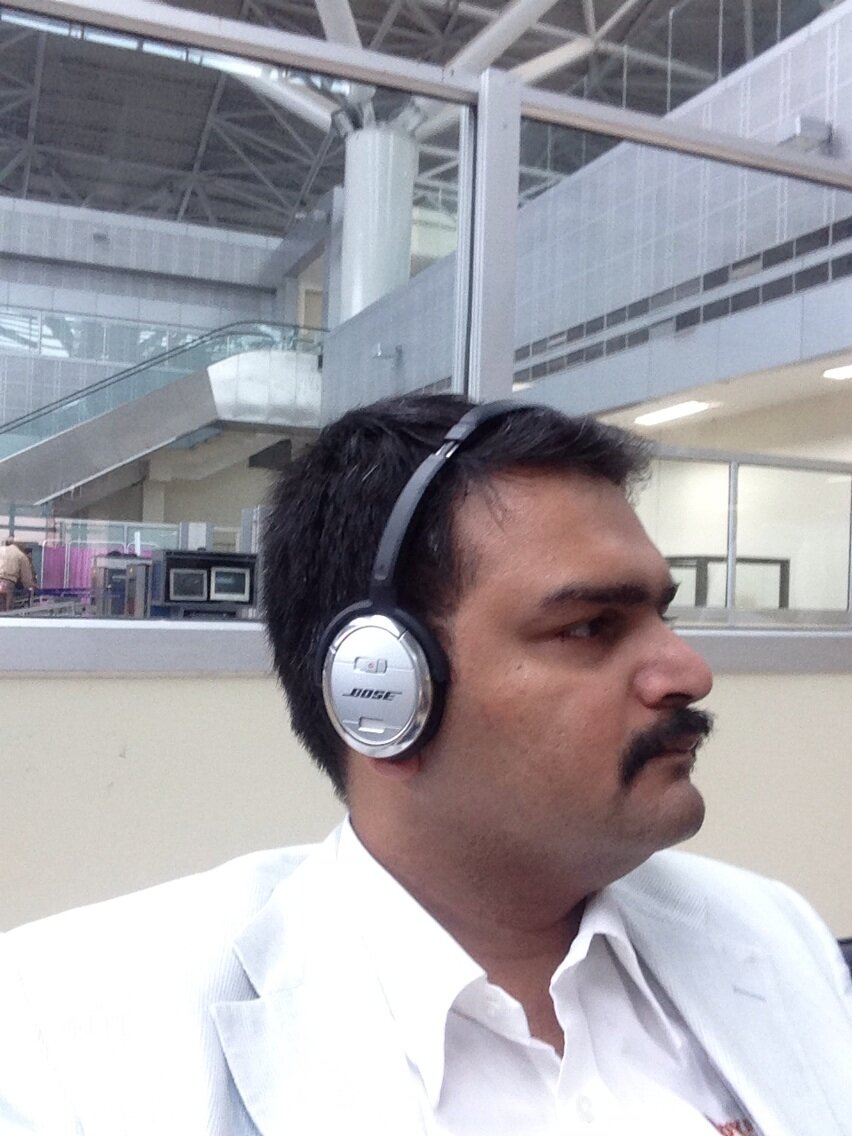
What hit me was the way the guy at the Bose store handled the Sale. He didn’t sell the product, not even the experience, but just like how a real staff of Apple provides you a solution – that’s what he did. I was walking back with a gleaming smile on my face, happy about my purchase. And that set me thinking.. If only retail staff were to stop selling and start providing solutions to customers… As the flute music of Pandit Haripraad Chaurasia reverberates on my ears through a Bose Quiet Comfort 3 as I write this column. Bliss.

My Tesla India experience

On a bright and sunny Saturday afternoon, I decided to walk in to the Tesla India showroom located at Jio World Drive at BKC, Mumbai. It was...